FDIC-Insured Savings Accounts sets the stage for this enthralling narrative, offering readers a glimpse into a story that is rich in detail and brimming with originality from the outset. From understanding the role of FDIC in insuring savings to exploring the benefits over non-insured options, this topic delves deep into the realm of financial security.
FDIC-Insured Savings Accounts
When it comes to saving your hard-earned money, FDIC-insured savings accounts provide a secure and reliable option. The Federal Deposit Insurance Corporation (FDIC) is a government agency that protects depositors by insuring their funds in case a bank fails.
Maximum Coverage Amount
The FDIC offers up to $250,000 in coverage per depositor, per bank, for each account ownership category. This means that if a bank were to fail, your funds up to this amount would be protected.
Benefits of FDIC-Insured Accounts
- Security: Your money is protected up to the maximum coverage amount, giving you peace of mind.
- Peace of Mind: Knowing that your savings are insured can help alleviate worries about potential bank failures.
- Stability: FDIC-insured accounts are a safe and stable way to store your funds, ensuring they are easily accessible when needed.
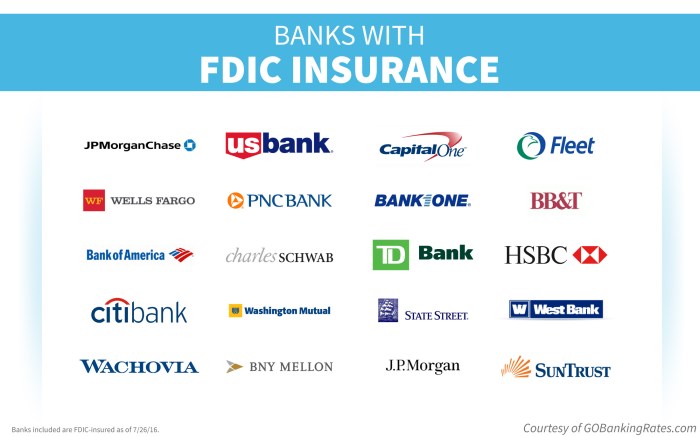
Financial Institutions Offering FDIC-Insured Savings Accounts
Many reputable financial institutions offer FDIC-insured savings accounts, including:
- Citibank
- Chase
- Bank of America
- Wells Fargo
Savings Accounts vs. Savings Bonds
When it comes to saving money, individuals often have the option of choosing between savings accounts and savings bonds. Both serve as vehicles for saving money, but there are key differences between the two in terms of liquidity, interest rates, risks, and the process of opening or purchasing.
Liquidity
Savings accounts are highly liquid, allowing account holders to deposit and withdraw funds as needed without penalty. On the other hand, savings bonds have specific maturity dates, meaning that they cannot be cashed in before the specified time without facing potential penalties.
Interest Rates
Savings accounts typically offer lower interest rates compared to savings bonds. While savings account interest rates are subject to change based on market conditions, savings bonds usually offer fixed interest rates for the duration of the bond.
Risks
Savings accounts are generally considered to be low-risk investments since they are FDIC-insured, protecting the deposited funds up to a certain limit. Savings bonds, although issued by the government, may carry some inflation risk as the fixed interest rate may not keep up with inflation over time.
Opening Process
Opening a savings account is a straightforward process that can usually be done online, over the phone, or in person at a bank or credit union. On the other hand, purchasing savings bonds involves buying them through the U.S. Department of the Treasury either online or through financial institutions.
In conclusion, FDIC-Insured Savings Accounts stand as a beacon of financial protection, ensuring peace of mind and security for your hard-earned money. With maximum coverage and a range of benefits, choosing an FDIC-insured savings account is a prudent choice for safeguarding your finances.
Top FAQs
What is the maximum coverage amount offered by the FDIC?
The FDIC provides coverage up to $250,000 per depositor, per insured bank, for each account ownership category.
How does FDIC insurance differ from non-insured options?
FDIC insurance guarantees the safety of your deposits up to the specified limit, providing protection in case the bank fails. Non-insured options do not offer this level of security.
Are online banks included in FDIC coverage?
Yes, online banks that are FDIC-insured receive the same protection as traditional brick-and-mortar banks.