
How to Track Savings Bond Values sets the stage for this enthralling narrative, offering readers a glimpse into a story that is rich in detail with casual formal language style and brimming with originality from the outset.
Understanding the value of your savings bonds is crucial for making informed financial decisions. This guide will walk you through the process of tracking savings bond values effectively.
Savings Account
A savings account is a type of deposit account offered by banks and financial institutions that allows you to safely store your money while earning interest on the balance. The main purpose of a savings account is to help individuals save money for future needs or emergencies.
Benefits of Having a Savings Account
- Interest Earnings: Savings accounts typically earn interest on the deposited funds, allowing your money to grow over time.
- Liquidity: Savings accounts offer easy access to your funds, making it convenient to withdraw money when needed.
- Safety: Funds in a savings account are FDIC-insured up to the maximum allowed by law, providing a secure way to store your money.
- Financial Planning: Having a savings account can help you set financial goals and save for specific purposes, such as a vacation, home purchase, or retirement.
Differences Between Savings and Checking Accounts
- Savings Account: Designed for saving money, earns interest, limited number of withdrawals per month, usually no check-writing capabilities.
- Checking Account: Used for everyday transactions, may offer check-writing abilities, typically do not earn interest, unlimited transactions allowed.
Tips for Choosing the Right Savings Account
- Compare Interest Rates: Look for a savings account with competitive interest rates to maximize your earnings.
- Fees and Minimum Balance: Consider any fees associated with the account and make sure you can meet the minimum balance requirements.
- Accessibility: Choose a savings account that provides easy access to your funds through ATMs, online banking, and mobile apps.
- Additional Features: Some savings accounts offer additional features such as rewards programs or automatic savings transfers, which can help you reach your financial goals faster.
Savings Bonds
Savings bonds are a type of investment issued by the government to raise funds for various projects. When you purchase a savings bond, you are essentially lending money to the government for a specified period, during which you will earn interest on your investment. Savings bonds are considered a low-risk investment option and are backed by the full faith and credit of the United States government.
Types of Savings Bonds
- Series EE Bonds: These are purchased at face value and accrue interest for up to 30 years. They are guaranteed to double in value if held for the full term.
- Series I Bonds: These bonds earn a combination of a fixed interest rate and an inflation rate that is adjusted semi-annually based on the Consumer Price Index.
Benefits of Investing in Savings Bonds
- Low Risk: Savings bonds are considered one of the safest investments since they are backed by the government.
- Fixed Interest Rates: Series EE bonds have fixed rates, while Series I bonds offer a fixed rate plus inflation adjustment.
- Tax Advantages: Interest earned on savings bonds is exempt from state and local taxes, and federal taxes can be deferred until the bond is cashed.
Risks Associated with Savings Bonds
- Interest Rate Risk: If market interest rates rise, the fixed rates on savings bonds may become less attractive compared to other investments.
- Inflation Risk: While Series I bonds offer inflation protection, they may still not keep pace with high inflation rates.
- Liquidity Risk: Savings bonds have a minimum holding period before they can be redeemed without penalty, which may limit access to funds in emergencies.
How to Track Savings Bond Values
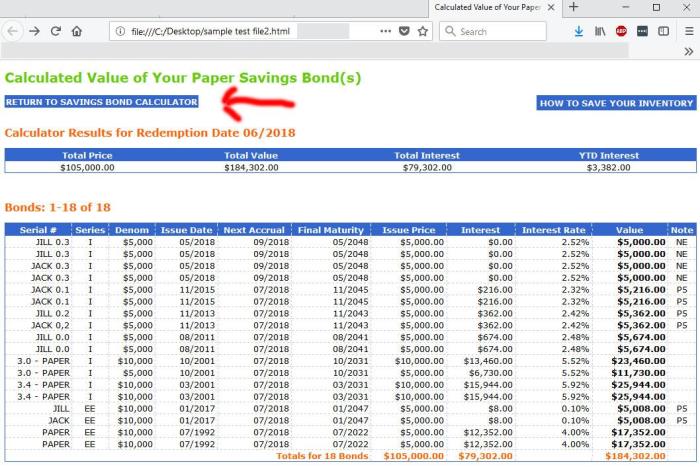
Tracking the value of savings bonds is essential for individuals looking to keep an eye on their investments and make informed financial decisions. By monitoring the value of savings bonds, you can assess the current worth of your bonds and determine when it may be the right time to cash them in or hold onto them for a longer period.
Step-by-Step Guide to Tracking Savings Bond Values:
- 1. Register for an online account: Sign up on the TreasuryDirect website to access your savings bond information and track their current values.
- 2. Input bond details: Enter the necessary details of your savings bonds, such as the bond series, issue date, and serial number, to view the current value.
- 3. Check the value: Monitor the fluctuation in the value of your savings bonds regularly to stay informed about any changes in their worth.
Tools and Resources for Tracking Savings Bond Values:
- 1. TreasuryDirect website: The official platform for managing savings bonds provides up-to-date information on bond values.
- 2. Savings Bond Calculator: Utilize the online calculator available on the TreasuryDirect website to calculate the current value of your savings bonds.
- 3. Financial Apps: Consider using financial apps that offer bond tracking features to keep a closer watch on your investments.
Tips for Monitoring Savings Bond Values Effectively:
- 1. Set up alerts: Enable notifications to receive updates on any changes in the value of your savings bonds.
- 2. Keep track of maturity dates: Be aware of when your savings bonds are set to mature to make informed decisions on when to redeem them.
- 3. Consult with financial advisors: Seek guidance from professionals to understand the implications of the value fluctuations of your savings bonds.
In conclusion, tracking savings bond values is an essential aspect of managing your investments. By following the steps Artikeld in this guide, you can stay on top of your savings bond portfolio and make strategic financial choices.
Essential FAQs
How often should I track the value of my savings bonds?
It’s recommended to track the value of your savings bonds at least once a year to stay updated on their performance.
Can I track savings bond values online?
Yes, there are online tools and resources available that allow you to track the current value of your savings bonds.


