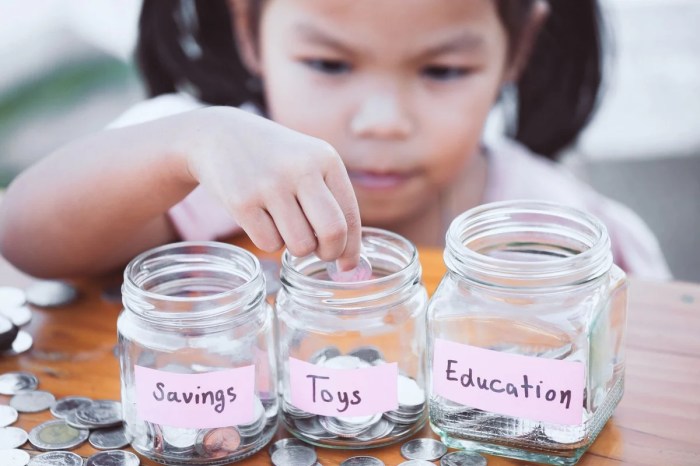
Exploring the world of Savings Account for Kids, this introduction sets the stage for an informative journey into the realm of financial education for children.
From the benefits of opening an account to practical examples, this topic delves into why it’s crucial to start teaching kids about money management early on.
Savings Account for Kids
Opening a savings account for kids is a great way to introduce them to the concept of saving money and financial responsibility from a young age. It provides a safe place for children to store their money and watch it grow over time through interest earned.
Benefits of Opening a Savings Account for Children
- Teaches financial literacy and responsibility from a young age.
- Encourages regular saving habits and setting financial goals.
- Allows children to earn interest on their savings, helping their money grow over time.
- Provides a sense of ownership and independence for children over their finances.
Teaching Financial Literacy Through Kids’ Savings Accounts
Opening a savings account for kids is a practical way for parents to teach their children about the importance of saving, budgeting, and setting financial goals. Parents can involve children in decision-making about how much to save, setting savings goals, and tracking their progress over time.
Banks Offering Specialized Savings Accounts for Children
- Chase First Banking
- Schwab Bank High Yield Investor Checking Account for Teens
- Alliant Kids Savings Account
- PNC ‘S’ is for Savings Account
Importance of Savings Accounts

Financial education is crucial for children to develop good money management habits from a young age. Introducing kids to savings accounts not only teaches them the value of saving money but also instills important financial skills that will benefit them in the long run.
Comparison of Regular vs. Kids’ Savings Accounts
- Regular Savings Account:
- Typically higher minimum balance requirements
- Higher interest rates
- May offer additional features like online banking
- Kids’ Savings Account:
- Lower or no minimum balance requirements
- Simplified terms and conditions
- Designed to be more accessible and engaging for children
Role of Savings Accounts in Money Management
Savings accounts play a crucial role in teaching children about financial responsibility. By setting aside a portion of their allowance or gifts into a savings account, kids learn the importance of saving for future goals and emergencies. This helps them develop discipline and a sense of financial security.
Long-Term Financial Planning for Kids
Savings accounts for kids serve as a foundation for long-term financial planning. By starting early, children can develop a habit of saving and investing wisely, which can lead to financial stability and growth in the future. Teaching kids about the power of compound interest and setting financial goals can help them achieve financial independence as they grow older.
Savings Bonds
Savings bonds are a type of government security that allows individuals to lend money to the government in exchange for a fixed interest rate over a specific period. They differ from savings accounts as they are typically long-term investments with a fixed maturity date, and they are not as liquid as savings accounts.
Benefits of Investing in Savings Bonds for Children’s Future
- Provide a safe and secure way to save money for the long term.
- Teach children the value of investing and patience.
- Offer a guaranteed return on investment.
- Can be used for educational expenses or other financial goals in the future.
Types of Savings Bonds Available for Minors
- Series EE Savings Bonds: These bonds are purchased at half of their face value and earn a fixed interest rate over 30 years.
- Series I Savings Bonds: These bonds offer a combination of a fixed interest rate and an inflation rate component, providing protection against inflation.
Tips for Parents to Utilize Savings Bonds for Children’s Financial Planning
- Start investing in savings bonds early to maximize the benefits of compounding interest.
- Explain to children the concept of savings bonds and how they can help secure their financial future.
- Set specific goals for the savings bond investments, such as college tuition or a down payment on a house.
- Monitor the performance of the savings bonds regularly and consider reinvesting the proceeds to continue growing the investment.
In conclusion, Savings Account for Kids serves as a gateway to instilling financial responsibility and planning in the younger generation, laying the foundation for a secure financial future.
Expert Answers
What age is appropriate to open a savings account for a child?
It’s never too early to start! Many banks offer children’s savings accounts as soon as the child is born.
Can children access the money in their savings account?
Typically, children can access the funds with parental permission or supervision, depending on the bank’s policies.
Are there any tax benefits to opening a savings account for kids?
Some savings accounts for children may offer tax benefits or incentives, so it’s worth exploring different options.


