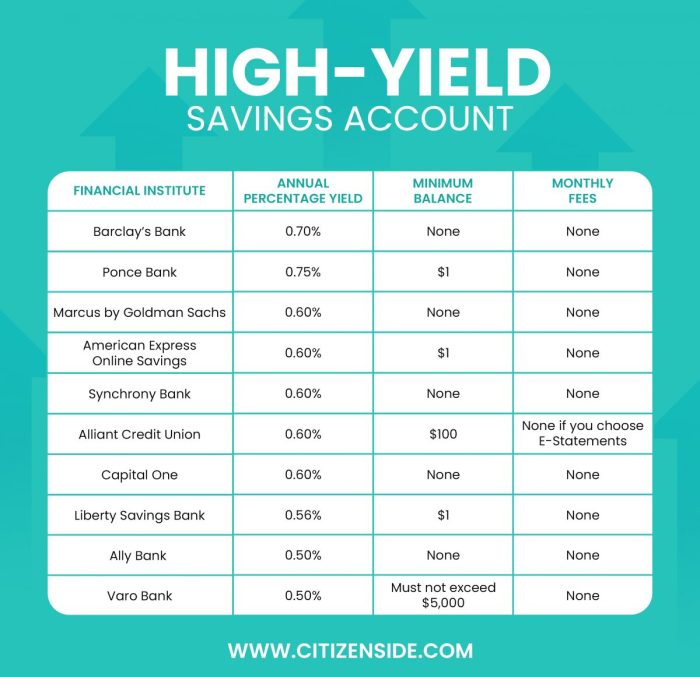
High-Yield Savings Account Rates sets the stage for this enthralling narrative, offering readers a glimpse into a story that is rich in detail with casual formal language style and brimming with originality from the outset.
Understanding the differences between high-yield savings account rates and regular savings account rates is crucial for making informed financial decisions. This guide will provide valuable insights into maximizing your savings potential.
High-Yield Savings Account Rates
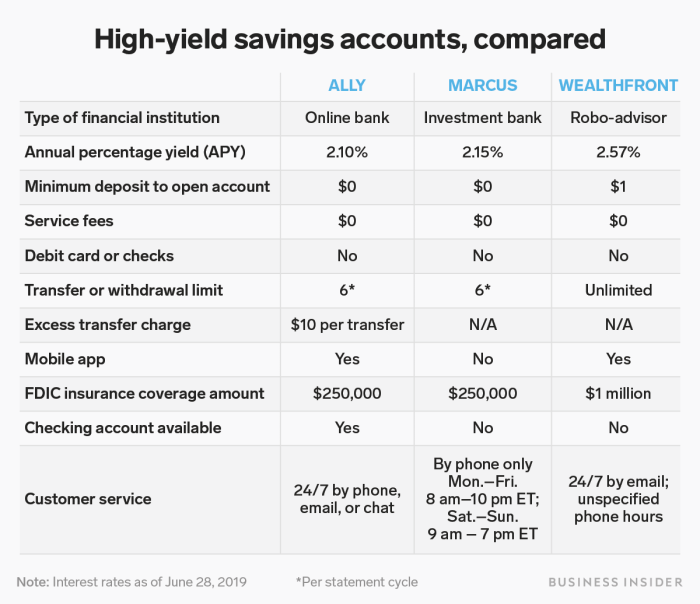
High-yield savings account rates refer to the interest rates offered by financial institutions on savings accounts that are higher than the average rates available in the market. These accounts typically provide a higher return on your savings compared to traditional savings accounts.
Comparison with Regular Savings Account Rates
When comparing high-yield savings account rates with regular savings account rates, the main difference lies in the interest rates offered. High-yield accounts tend to offer significantly higher APY (Annual Percentage Yield) compared to regular savings accounts. This means you can earn more interest on your savings over time with a high-yield account.
Tips to Find the Best High-Yield Savings Account Rates
- Research Online: Utilize online comparison tools and websites to compare rates offered by different banks and financial institutions.
- Consider Online Banks: Online banks often offer higher interest rates on savings accounts due to lower overhead costs. Explore options with online banks for better rates.
- Look for Promotions: Keep an eye out for promotional offers, sign-up bonuses, or limited-time rates to maximize your savings.
- Check for Fees: Ensure that the high-yield savings account you choose does not have high fees that could eat into your interest earnings.
- Monitor Rates: Interest rates on savings accounts can change frequently. Stay informed and be ready to switch to a better rate if necessary.
Savings Account vs. Savings Bonds
When it comes to saving money, there are various options to choose from, including savings accounts and savings bonds. While both can help you grow your savings, they have distinct differences and benefits that cater to different financial goals and preferences.Savings accounts are typically offered by banks and credit unions, allowing you to deposit and withdraw money as needed while earning interest on the balance.
On the other hand, savings bonds are issued by the government and have a fixed term before they reach maturity, at which point you can cash them out with interest.
Benefits of Investing in a Savings Account vs. Savings Bonds
- Savings accounts offer more flexibility in terms of access to funds, allowing you to withdraw money at any time without penalties. This makes them ideal for emergency savings or short-term financial goals.
- With savings bonds, you are locked into a specific term before you can cash them out without incurring penalties. They are better suited for long-term savings goals where you can afford to set aside money for a predetermined period.
- Savings accounts usually offer higher interest rates compared to savings bonds in the current low-interest-rate environment, allowing your money to grow faster over time.
Examples of When to Choose a Savings Account Over Savings Bonds
- If you anticipate needing access to your funds in the near future for emergencies or unexpected expenses, a savings account would be a better choice due to its liquidity.
- For short-term savings goals such as saving for a vacation or a down payment on a car, a savings account provides the flexibility to deposit and withdraw money as needed while earning interest.
- If you prefer to have more control over your savings and want the option to adjust your deposits or withdrawals based on your financial situation, a savings account would be the more suitable option.
In conclusion, navigating the realm of high-yield savings account rates can lead to significant financial gains. By following the tips Artikeld here, you can make the most of your savings and secure a brighter financial future.
Query Resolution
What are high-yield savings account rates?
High-yield savings account rates refer to the interest rates offered by financial institutions on savings accounts that are higher than the average market rates.
How do I find the best high-yield savings account rates?
To find the best rates, consider online banks, credit unions, and compare offers from different institutions. Look for accounts with competitive APYs and minimal fees.
What are the benefits of investing in a savings account over savings bonds?
Savings accounts offer easier access to funds, liquidity, and flexibility compared to savings bonds, which have fixed terms and penalties for early withdrawal.
When is it better to choose a savings account over savings bonds?
Choosing a savings account is preferable for short-term savings goals, emergency funds, or when you need easy access to your money without facing penalties for withdrawal.


