With Savings Bonds for Kids at the forefront, this paragraph opens a window to an amazing start and intrigue, inviting readers to embark on a storytelling casual formal language style filled with unexpected twists and insights.
When it comes to securing your child’s financial future, investing in savings bonds can be a wise decision. In this guide, we will explore the concept of savings bonds for kids, the benefits they offer, tips on choosing the right ones, and how they compare to other investment options for children.
Savings Bonds for Kids
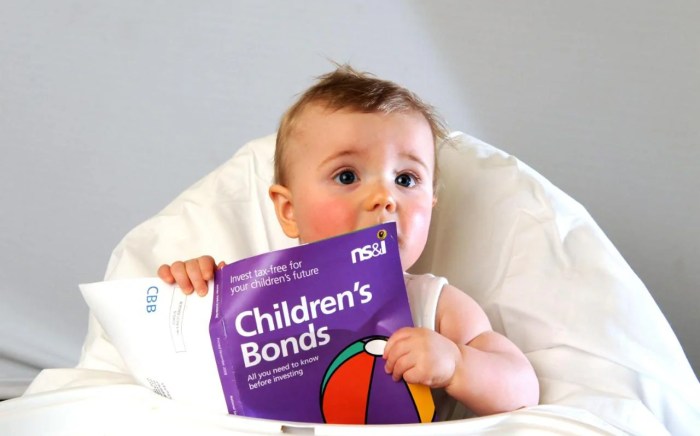
Investing in savings bonds for children is a great way to help secure their financial future. Savings bonds are low-risk investments issued by the government that typically offer a fixed interest rate over a specific period of time. Here are some key points to consider when it comes to savings bonds for kids:
Benefits of Investing in Savings Bonds for Kids
- Security: Savings bonds are backed by the government, making them a safe investment option for children.
- Fixed Interest Rates: Savings bonds offer a guaranteed interest rate, providing a stable return on investment.
- Educational Tool: Introducing children to savings bonds can help teach them about the importance of saving and investing for the future.
Tips on Choosing the Right Savings Bonds for Children
- Consider the Child’s Age: Different types of savings bonds are available for children of different ages, so choose one that aligns with the child’s age and investment goals.
- Duration: Decide whether you want a short-term or long-term savings bond based on the child’s future financial needs.
- Interest Rate: Compare the interest rates offered by different savings bonds to find the most competitive option.
Advantages of Savings Bonds over Other Investment Options for Kids
- Low Risk: Savings bonds are considered low-risk investments, making them a safe choice for children’s savings.
- Tax Benefits: Interest earned on savings bonds for children may be tax-exempt if used for qualified education expenses.
- Ease of Purchase: Savings bonds can be easily purchased online or at financial institutions, making them accessible for parents and guardians.
Savings Account vs. Savings Bonds
When it comes to saving money for kids, two popular options are savings accounts and savings bonds. Let’s delve into the key differences between the two and explore the risks and potential returns associated with each.
Differentiation between Savings Accounts and Savings Bonds
- A savings account is a basic deposit account typically offered by banks or credit unions, allowing easy access to funds through withdrawals and deposits.
- On the other hand, savings bonds are investments issued by the government, with a fixed interest rate and maturity period, usually ranging from 1 to 30 years.
- Savings accounts offer liquidity and flexibility, while savings bonds provide a guaranteed return over a specified period.
Risks Associated with Savings Accounts for Kids
- Savings accounts may have lower interest rates compared to savings bonds, which could result in lower returns over time.
- There is a risk of inflation eroding the purchasing power of the money saved in a traditional savings account.
- Children may be tempted to withdraw money frequently from a savings account, hindering long-term saving goals.
Process of Opening a Savings Account for a Child
- Visit a bank or credit union with the child and bring necessary identification documents for both the child and the parent or guardian.
- Complete the account opening forms, specifying the child as the account holder and the parent or guardian as the joint account holder.
- Deposit an initial amount as required by the bank to activate the account.
Potential Returns of Savings Bonds Compared to Savings Accounts for Children
- Savings bonds typically offer a higher fixed interest rate compared to savings accounts, providing a more secure and potentially higher return on investment.
- Since savings bonds have a maturity period, they can instill a sense of long-term saving and financial discipline in children.
- While savings accounts offer easy access to funds, savings bonds can yield greater returns over time if held until maturity.
In conclusion, Savings Bonds for Kids present a fantastic opportunity to kickstart your child’s financial journey on the right foot. By understanding the advantages they offer over other investments, you can make a well-informed decision to secure a brighter future for your little ones.
Question & Answer Hub
What age is appropriate to start buying savings bonds for kids?
It is recommended to start buying savings bonds for kids when they are born or at a very young age to maximize their growth potential.
Can savings bonds lose value?
No, savings bonds are considered low-risk investments and are backed by the government, so they do not lose value like other investment options.
Are savings bonds tax-free for kids?
Yes, the interest earned on savings bonds for kids is typically exempt from state and local taxes, making them a tax-efficient choice.